comments:
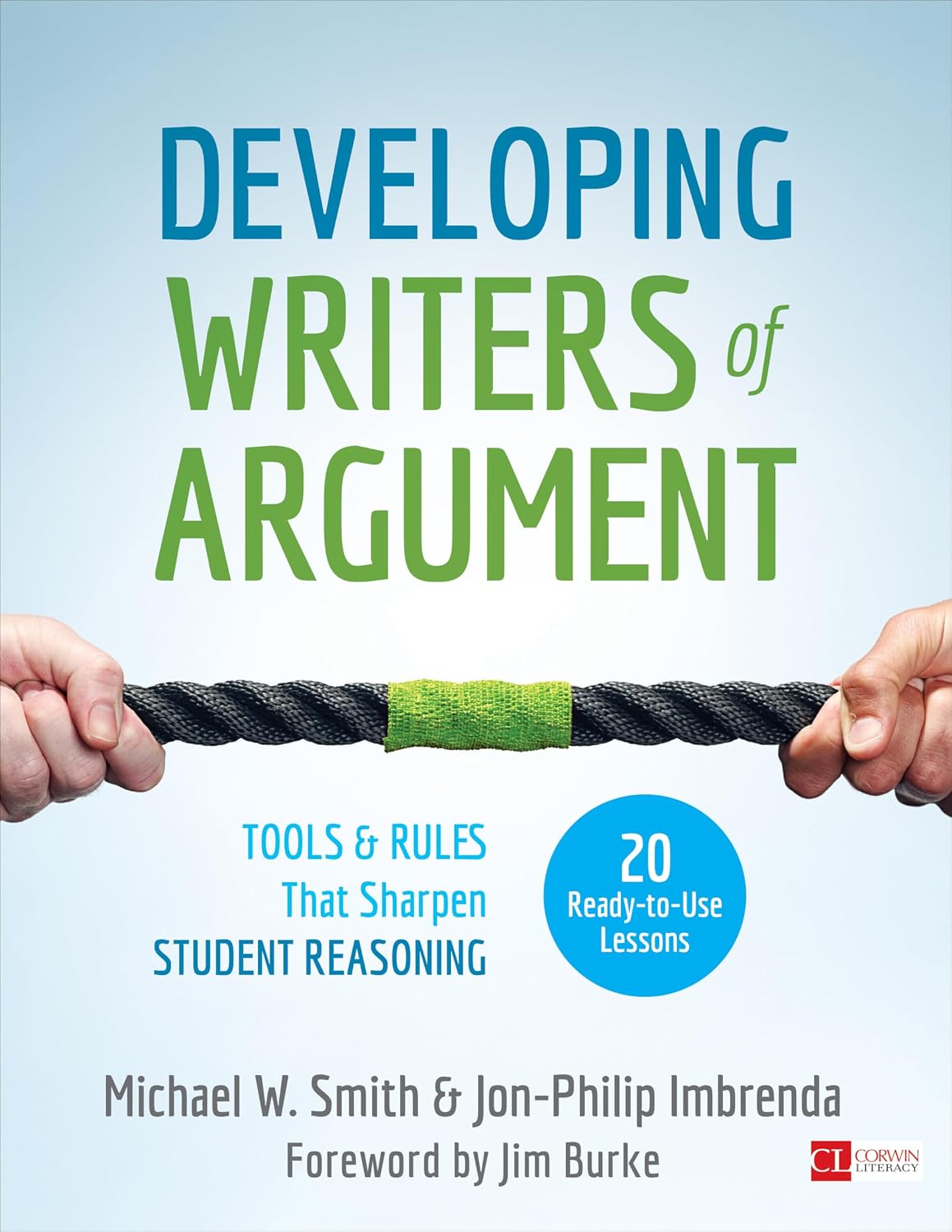
First, I want to share a resource: Developing Writers of Argument. I saw this author present at NCTE right before the book was published, and I’ve used a lot of his resources and suggestions. I find it immensely practical and helpful. Are they writing arguments about literature or informational texts? I tend to do mostly about literature, so some of what I suggest may not be as useful. When you say “surface level arguments,” what do you mean? Or, even better, could you give an example? I’m not entirely sure what you mean by bulking up their paragraphs, but if you can give an example there, maybe we can share some suggestions. As for the formulaic nature of their writing, I’ve actually come around to think that’s okay. I would rather that they’re using the formulas in high school, and I’ll hope and trust that they’ll be able to write with more style and less formula in college, than that they don’t have the formulas internalized and they’re just floundering wildly about on the page. If it reduces the cognitive load such that they can focus on expressing their ideas, I’m all for formulas. For 10th graders, too, I would rather that their writing is “dry” but academic than overly informal or inappropriate for the task/audience. For word choice, I talk a lot about finding the most precise word. So, saying “good” might be correct, but saying “virtuous” is more precise when analyzing a character. I give lots of references to help with word choice: tone words, character traits, rhetorically accurate verbs, etc. In writing conferences, I’ll say something like, “This isn’t the most precise word to use. You could use ___, which has connotations of ___, or you could use ___, which has connotations of ___. Which do you think fits better with what you want to express?” We do so much work analyzing connotations in the literature we study that this makes these conversations pretty easy and effective. I hope this helps!