comments:
https://www.amazon.com/dp/B08XZNRZV3?ref=ppx_yo2ov_dt_b_fed_asin_title&th=1
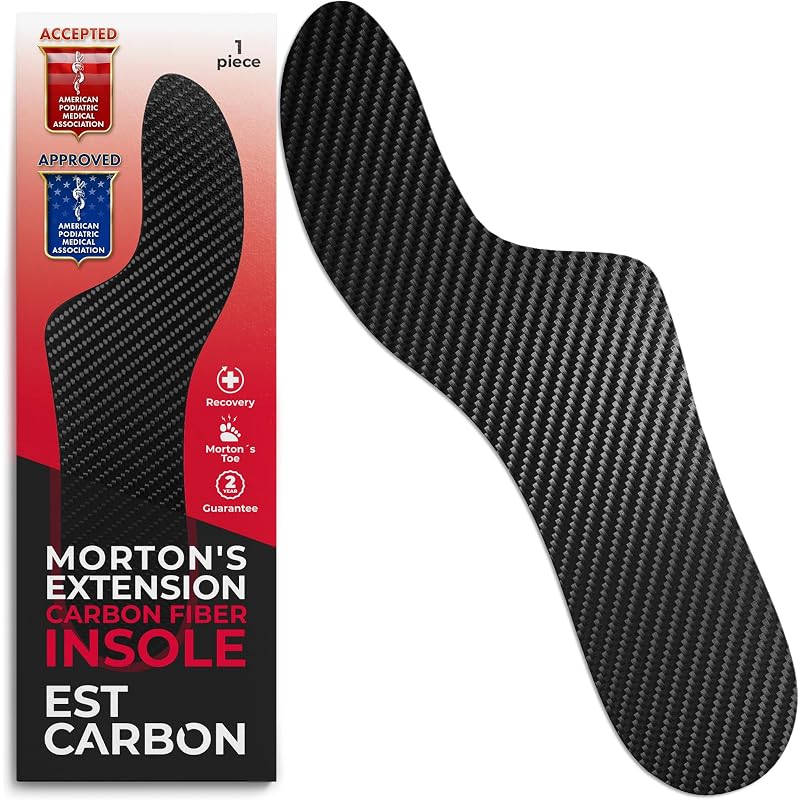
Hi, friends! Sorry for the long post. I'm just hoping something I learned along the way might help someone else who's struggling with this. I've had bilateral sesamoiditis for about 9 weeks now. I've spent thousands of dollars trying different sneakers, insoles, dancer's gel pads, metatarsal pads, and K-tape, and I've also been doing physical therapy for the past 4 weeks. Still, nothing made a dent in my sesamoiditis. I finally saw a podiatrist, who put me on a Medrol Dose Pack (steroids) and recommended carbon fiber plates (Morton's extensions) to immobilize the big toe joint. The first day I wore them for about 10 minutes, the second day for 15–20 minutes, and I've gradually increased my wear time from there. I can't tell you how grateful I am to have finally found something that's helping. Not only has my pain decreased significantly, but I also feel like these plates are finally giving my sesamoids a chance to heal. It's actually amazing to me how stiff they are while somehow still feeling springy when I walk. I can even walk down stairs without pain now, which I honestly never thought I'd say. I'm still not at the point where I can wear them all day, but every day I'm able to wear them a little longer. The carbon plates I'm using are the EST Carbon Morton's Extensions:https://www.amazon.com/dp/B08XZNRZV3?ref=ppx_yo2ov_dt_b_fed_asin_title&th=1 Since my sesamoiditis is bilateral, I wear one in each shoe. I can't imagine wearing one on only one side, so I've always wondered whether people with unilateral sesamoiditis wear them in both shoes to keep their gait balanced or if wearing just one isn't an issue. I wish someone had told me about carbon plate insoles months ago. That said, they feel very strange at first, and they may even be uncomfortable and painful initially. If your provider recommends them, I'd encourage you to give yourself some time to adjust before deciding they aren't for you. A few other things that have helped me: I only buy shoes that come in wide widths. My feet are not wide at all, but having plenty of room in the toe box allows your toes to spread naturally and gives enough space for both the carbon plate and your regular insole. Look for shoes with a stiff sole and a pronounced rocker bottom to reduce the workload on the big toe joint. For me, the Brooks Ghost Max 3 Wide has been a game changer. They're very cushioned without being so soft that my feet have to work harder to stay stable. I remove the Brooks insole and place the carbon fiber plate directly in the shoe. Then I put the insole from a pair of KURU shoes on top of the carbon plate. Of all the insoles I've tried, the KURU insoles are the only ones that provide the combination of arch support and cushioning that works for me. The whole process has honestly felt like putting together a puzzle. Good luck to everyone dealing with sesamoiditis. The emotional toll of this injury is often overlooked. It forces so many of us to slow down and learn patience in ways we never expected. If you're here, you've probably already tried a dozen different things and are just looking for something that helps. Don't lose hope. Recovery can be frustratingly slow, but there is light at the end of the tunnel. Keep advocating for yourself, keep experimenting (with your healthcare provider's guidance), and trust that with persistence and patience, you'll find what works for you. Oh, and one last thing. This won't apply to everyone, but it was a huge lightbulb moment for me. The nerves that provide sensation to the area around the sesamoids ultimately originate from the sciatic nerve roots. I developed bilateral sciatica several weeks after sesamoiditis. Whether it was from changes in my gait as I tried to avoid pain, prolonged inactivity, or something else entirely, it became an important part of my recovery. As a result, much of my rehab now focuses on core, glute, and back strengthening, along with improving my movement mechanics, so it's not just treating my feet. It may not be relevant for everyone, but if you're dealing with sesamoiditis and also have pain shooting into your buttocks or down your leg, it's worth mentioning to your healthcare provider or physical therapist.