comments:
Very cute! I agree you should have a third layer, but NO BATTING. Your third layer could be 100% cotton flannel, another layer of 100% quilting cotton, or even a 100% cotton sheet, but not batting, Minky, fleece, knits or any fabric with polyester or elastayne (like spandex)... they won't fray! And another tip, invest in a pair of spring loaded scissors! Your hands will thank you! 🙋🏼♀️❤️🪡🧵 https://a.co/d/0j7HUGu1
OMG, cute fabric! So, let's try to get your questions answered. I'm not clear from your picture how many layers you are using, and whether they are all 100% cotton. These two factors can make all the difference in rag quilts. Three or 4 layers gives you very fluffy borders between your squares and 100% cottons fabrics fray the best. 100% cottons are woven fabrics, whereas some fleece and minky types are polyester and they will not fray properly. Honestly, I don't see anything unfixable here, but of course, it is nice when you can enjoy the process. Rag quilts don't require perfect seams, so don't sweat that if you're a beginner sewist... REALLY! It's sometimes hard to see the beauty in what we are creating while we are making this type of quilt because the magic happens in the washing & drying (usually 2-3 times!) phase. If you have any polyester blends, then I would recommend ripping out stitches and replacing those fabrics. You've got this, so trust the process! A couple important tips.... ¹The more even your seams are, the more even the fluff will be (I've even trimmed seams down before washing if something looked off.) ² Closely spaced cuts fray better in the wash. ³Making all those cuts is a major work out for your hands, regardless of the size of the quilt! Give yourself a few days to get through it all, and SPRING LOADED SCISSORS are a blessing for rag quilts! https://a.co/d/094eO7gj ⁴If you accidently snip the seam, don't sweat it! Sew over it before you wash/dry it, and you'll never see it. 🙋🏼♀️❤️🪡🧵 I've included a video that might give you a few more tips https://youtu.be/19CxfONJG6A?si=rupHI9EV78aOBEWqand a picture from a video to show you what a typical section looks like before washing. ❤️
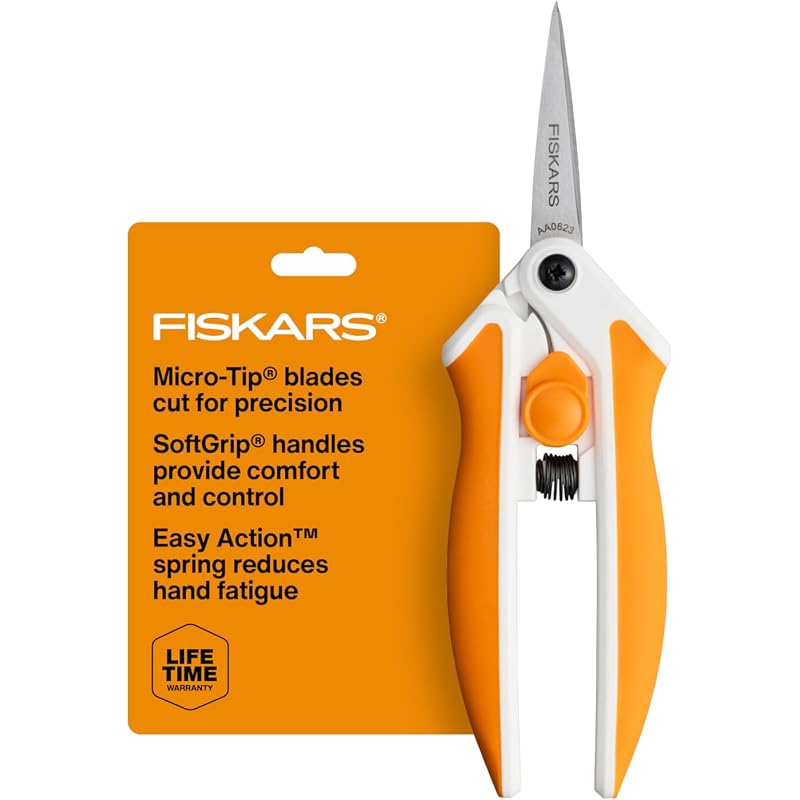
your everyday scissors have been long considered a poor man's nippers, but the more I read your take on precision shears, they seem like at least a rival to single-bladed nippers Yeah, regular scissors would be terrible. I specifically use the Fiskars Micro-Tip Easy Action because they have both an incredible fine, but chisel stepped point, and a very long broader cutting base which is helpful in case I just want to chop straight through sprues or whatever without wearing the precision point. They're extremely stiff, they don't flex or bow the way most standard scissors would when dealing with harder materials, which means you tend not to have a problem getting a cut on the gates exactly where you want them to, and the blades themselves are thin enough that you can maneuver into tight spaces on the sprue very easily. If I'm going to be real, (and a bit grossly TMI,) the whole reason I owned the scissors in the first place is because I found them to be a useful tool for getting precise cuts into my toenails when I got ingrown nails, because I could cut pretty far in and precisely, without mangling the cut, so I could leave enough material that I could get solid purchase with tweezers, (or even occasionally needle nose pliers, if the ingrown part was embedded enough to need extra force to get it out,) to pull the offending part of my nail out. They worked better than any purpose made cuticle scissors I'd ever encountered because the cut is so exacting and the scissors are thin enough that they never felt mushy trying to get underneath my nails, even though I was basically cutting right up next to the nail bed. (Plus even cuticle scissors have a tendency to slip or twist when you're cutting a thick enough nail. Fiskars will stay in exactly the orientation you're applying them during the cut.) I figured if they could deal with something as both gnarly and meticulous as that, they could probably handle cutting sprues, and since I had them around anyway that's just what I defaulted to when I first started. After a lot of use they do lose a little bit of the edge, but I've found you can actually lap them back into place by simple honing the edge with another piece of flat metal, (I do this with my hobby knife blades and it has extended the life of both as a result.) Plus they're remarkably functional as all-purpose scissors, so I have a couple pairs and they live in different rooms in my house and in my travel pack for when I'm building kits at work. Basically the only I don't use them for is their intended purpose, since I don't do any textile work. (Also, the link I included above is to the higher quality titanium coated ones, but I also used the plain steel version and in my experience they're just as effective.) They might not be as clean or buttery smooth as a a single bladed nipper, and eventually I'll have to try one out, but they genuinely have given me so little trouble with stress marks. You could probably do most cuts in two steps by just using a glass file to take of the numb, but even when I am shaving the nub down first with a hobby knife, you can get the cut close enough with the shears that you can basically follow the contour of the part afterwards with the knife and as long as the blade is sharp there tends to be so little material left that it's an easy operation. But especially for a time saving tool? Like, I've almost never had to make multiple cuts per gate to get a piece off of a sprue. The blade geometry is just so much different from a nipper that it's pretty much trivial to make your first cut where I assume the the final cut with a single bladed nipper would normally, if not closer than you can usually get with a nipper.