comments:
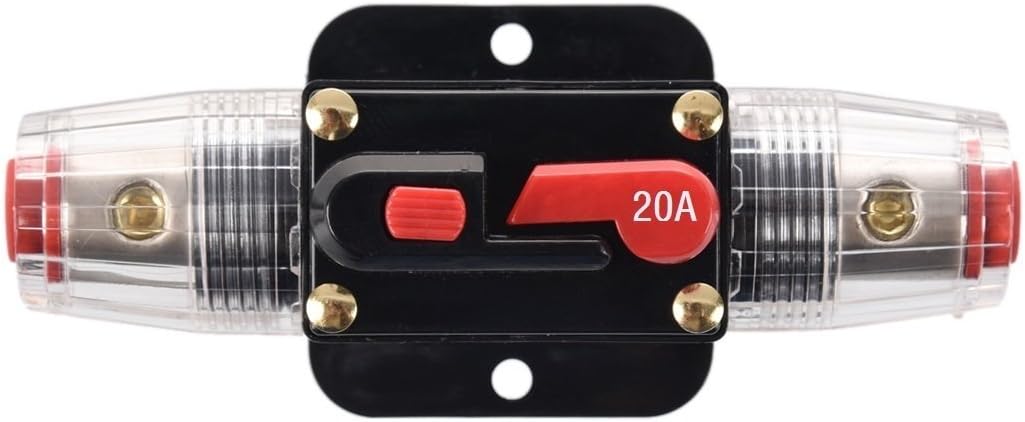
That was certainly not an ignorant question, OP. In fact, you noticed exactly what u/oh_errol and I were hinting at in our earlier posts. Many of us amateur astronomers think Anderson Powerpole (PP) connectors are one of the best upgrades you can make to your power system. Here is why. Anderson Powerpole connectors are: • Polarized, high-current connectors that are durable and easy to handle in the field• Surprisingly inexpensive and readily available from Amazon, Powerwerx, and other suppliers• Available in many configurations to fit virtually any equipment• Offered in custom cable assemblies by Powerwerx• Already installed on many batteries, power meters, and accessories• Capable of eliminating bulky screw terminals and other troublesome connections• Excellent for reducing setup and teardown time by making your entire power distribution system truly plug and play Those so-called cigarette lighter plugs are bulky and failure-prone compared with the wonderfully compact Anderson Powerpole connector. To answer your question, I always begin with a Powerpole connector at the battery. If the battery already has one installed, I use it. If not, I use an adapter cable to convert it. From there, I simply use adapter cables to connect everything else. For my Bioenno BLF-1212A, the power path is: BLF-1212A PP connector → PP-to-DC5521 adapter cable → AM5 mount power input → AM5 power output → DC5521-to-DC5521 male-to-male extension cable → ASIAIR Plus → DC5521 and USB connections to the remaining accessories. Another system I use looks like this: 100Ah LiFePO4 screw terminals → ring terminal-to-PP adapter cable → PP-to-DC5521 adapter cable → AM5 mount power input → AM5 power output → DC5521-to-DC5525 male-to-male adapter cable → SV241 Pro power distribution and USB hub → Pegasus DC5521-to-USB-C adapter cable → Mele Q4C mini-PC. (Note that the 10A circuit breaker that I use with this configuration is not shown in this connection chart.) Another advantage of using Powerpole connectors is that they make it easy to insert an inline power meter anywhere between the battery and your equipment. That allows you to monitor current draw, power consumption, and remaining battery capacity with a high degree of precision. Here is an example of that configuration: BLF-1212A PP connector → PP inline power meter PP → PP-to-DC5521 adapter cable → AM5 mount power input → AM5 power output → DC5521-to-DC5521 male-to-male extension cable → ASIAIR Plus → DC5521 and USB connections to the remaining accessories.