comments:
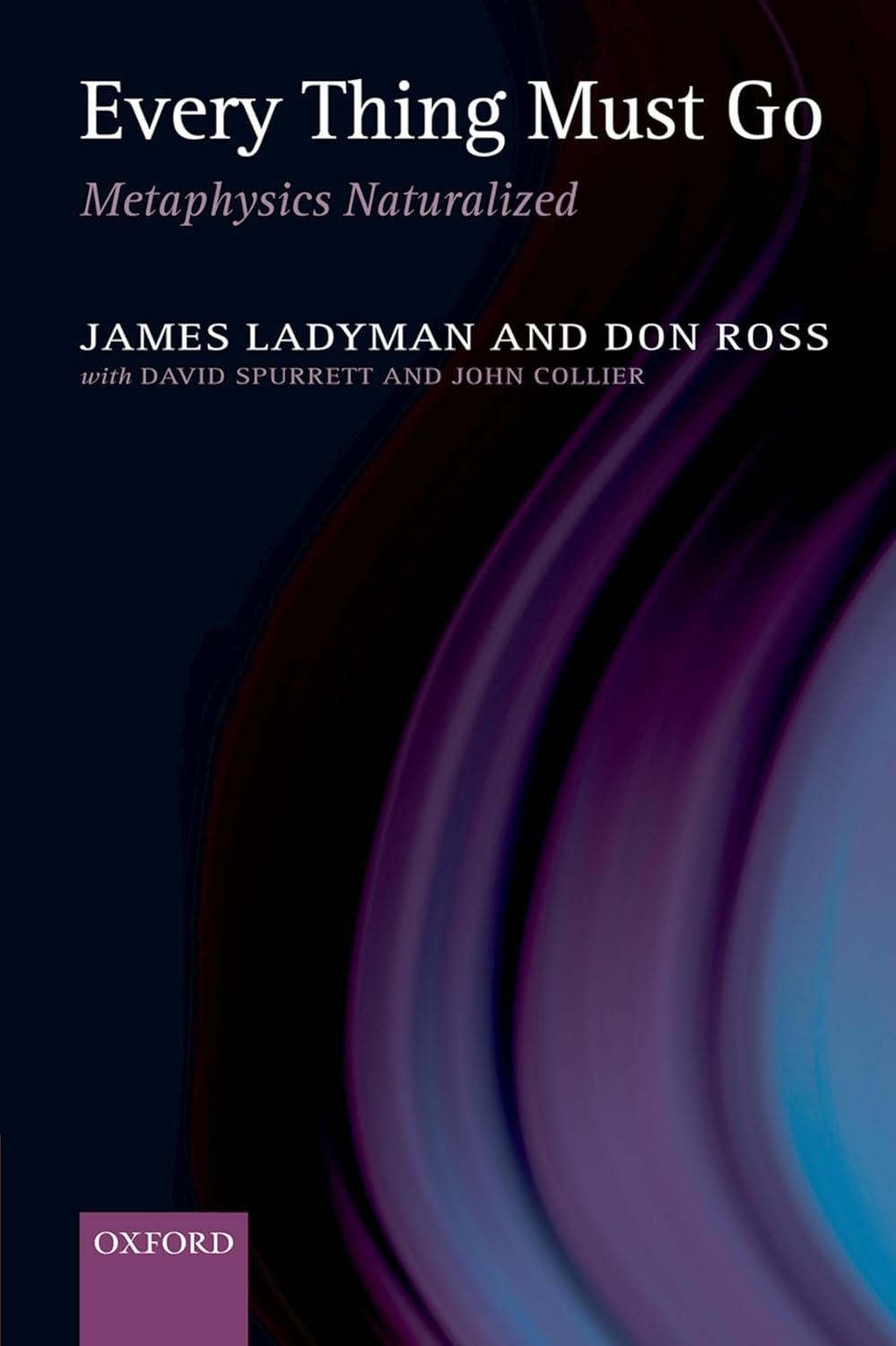
I didn't see that definition of 'natural' because you advertised the link as "bloat". Suffice it to say that I can make plenty of hay of the assertion of causal closure: RealityApologist: Naturalism is the most permissive of these positions, and probably the hardest to define (in part because it can get really close to physicalism). Non-physicalist naturalists relax the claim that physics is the final arbiter over what does and doesn't exist, but otherwise hold to many of the same ideas that physicalism does. Naturalists endorse causal closure, but (at least sometimes) embrace things like downward causation, genuine metaphysical emergence, holism, and other ideas that put some composite objects on equal ontological footing with the objects of fundamental physics. A naturalist might assert, for instance, that everything that exists or occurs is consistent with the rules of fundamental physics, but that those rules don't exhaustively describe what's real. That is, they might assert that any real system's behavior can be predicted by the laws of fundamental physics, but that there are interesting features of some real systems' behavior which are missed by those laws. While most physicalists believe that the laws of the higher level special sciences are in principle derivable from the laws of fundamental physics, naturalists have room to deny that claim. A position like ontic structural realism--which denies the distinction between abstract and concrete objects, and asserts that only patterns exist--is a prototypical non-physicalist naturalist position. Dan Dennett, James Ladyman, Don Ross, Cliff Hooker, Philip Kitcher, and Sean Carroll are all non-physicalist naturalists (so am I). Ladyman & Ross' book Every Thing Must Go is a great detailed look at a non-physicalist naturalist system (and a spirited defense of that position) This position is actually rather weak, insisting only on some rather mild claims like causal closure, Ladyman's "primacy of physics principle," (which states that real things can't behave in a way that's inconsistent with physics), or similarly general principles. I find naturalism more plausible than physicalism in virtue of many of the advances that have come out of complex systems theory in the last few decades, which I think have given us good reasons to think that strong emergence, downward causation, and similar ideas that seem a little at odds with physicalism are not only real, but can be given precise scientific and mathematical characterizations. Society is not a closed system from the perspective of a member. Nobody can "stand outside" of it, like a scientist can "stand outside" of her experimental apparatus. To the extent that successful explanations require one to be able to "stand outside"—and I suspect this covers all the examples in your mind and in Dawes'—then you've just reconstructed the natural sciences vs. special sciences via another route. See, with a remotely cogent definition, we can move from 1. to 2. to 3.: u/ExplorerR: "We can be confident it will continue" u/labreuer: "we can expect this pattern to continue [with zero indication of where or how far]" we can put reasonable bounds on where & how far this pattern will continue You've resisted doing 3. with all your might. Despite the fact that you surely know people who read your original claim or Dawes' paper will have some ideas of the suggested if not intended answer. Humans are very good at "over-extrapolating". It's what allowed us to think that the motion of the planets is no different in principle from the motion of objects on and near the earth's surface, so it's quite potent. But we often go way too far, like thinking that humans & groups thereof can be studied as if they're closed systems. Feel free to pretend I'm confused, rather than pressing for you to move from 1. to 2. to 3. But I can bring receipts that show I was doing that all along, and that you were resisting all along. The evidence is mounting that you want people to engage in "over-extrapolating".