God and the Gay Christian: The Biblical Case in Support of Same-Sex Relationships (Revised and Expanded)

God and the Gay Christian: The Biblical Case in Support of Same-Sex Relationships (Revised and Expanded)

similar products:

comments:

themsc190 posted on r/christianity2d

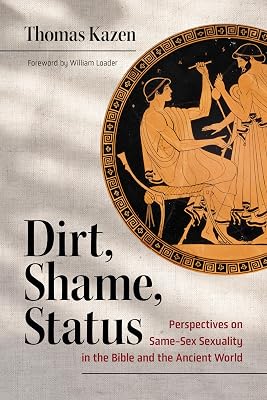
I’m sure you’ve heard of Matthew Vines’ God and the Gay Christian. If you want a brief overview of his case, see his website here. Similarly, another one that’s recommended often is Justin Lee’s Torn, which is a bit different due to its autobiographical parts, and Lee’s summary of his case is here. Going in the more scholarly but accessible direction is Duke professor Karen Keen’s Scripture, Ethics, and the Possibility of Same-Sex Relationships and The Bible and Sexuality: A Course Reader One of the latest scholarly books I’m excited to read is Thomas Kazen’s Dirt, Shame, Status: Perspectives on Same-Sex Sexuality in the Bible and the Ancient World, which is positively reviewed here. In terms of scholarly articles, my top recommendation which you’ve already seen is Dale Martin’s “Heterosexism and the Interpretation of Romans 1,” which demonstrates the modern presuppositions that non-affirming scholars bring to so-called traditional readings of that passage. I know some people whose minds have been changed by Jeffrey Siker’s article, “How to Decide? Homosexual Christians, the Bible and Gentile Inclusion.”

themsc190 posted on r/gaychristians1w

I’m sure you’ve heard of Matthew Vines’ God and the Gay Christian. If you want a brief overview of his case, see his website here. Similarly, another one that’s recommended often is Justin Lee’s Torn, which is a bit different due to its autobiographical parts, and Lee’s summary of his case is here. Going in the more scholarly but accessible direction is Duke professor Karen Keen’s Scripture, Ethics, and the Possibility of Same-Sex Relationships. One of the latest scholarly books I’m excited to read is Thomas Kazen’s Dirt, Shame, Status: Perspectives on Same-Sex Sexuality in the Bible and the Ancient World, which is positively reviewed here. In terms of scholarly articles, my top recommendation is usually Dale Martin’s “Heterosexism and the Interpretation of Romans 1,” which demonstrates the modern presuppositions that non-affirming scholars bring to so-called traditional readings of that passage. I know some people whose minds have been changed by Jeffrey Siker’s article, “How to Decide? Homosexual Christians, the Bible and Gentile Inclusion.” Hope this is helpful! I’m always happy to talk about this stuff. Peace!

HoldMyFresca posted on r/antitheistcheesecake3w

I think it makes more sense within tradition than scripture, since the traditional teachings on both sanctification and on marriage/celibacy are incompatible with the very popular Side B view (which says that homosexual feelings are acceptable but not homosexual relationships) and with the very similar Side Y view (essentially the same thing but with different vocabulary). Only the Side X, or ex-gay view comports with tradition in any way, and given the failure of the ex-gay movement that one doesn’t fit with obvious reality, leaving the Side A (affirming) view as the only one left. That said when it comes to scripture I usually just cite this overview or this book since they do a better job of explaining things than I do. But basically it’s a combination of mistranslation of a couple Greek words with an overly broad application of what certain condemnatory texts are referring to. I will say that my position is definitely a deviation, but I think it’s the least significant and least problematic deviation. Side A requires a change in the understanding of the necessary and sufficient conditions for marriage, Side B/Y requires a change in the definition of sin itself and of what a “calling to celibacy” means, and Side X requires sticking your head in the sand and ignoring the fact that gay people don’t become straight (or otherwise just believing that gay people categorically cannot convert to Christianity). I find that Side A is the least problematic, as it doesn’t require entirely ignoring either observable reality or ignoring certain biblical teachings/texts, but merely requires a reinterpretation of previously “clear” passages. This is an easier pill to swallow intellectually, not just emotionally.